

Propagation and growing guide
Welcome to Louisiana Fig Lovers' rooting and cultivation resource. Whether you are propagating our premium dormant cuttings or establishing young fig trees in your orchard, this guide provides step-by-step instructions to ensure healthy root development, vigorous growth, and a bountiful harvest.
Why grow figs or from fig cuttings?
Why Grow Rare Fig Trees & Cuttings?
Harvested from healthy parent trees
Carefully selected for strong growth potential
Properly stored to maintain viability
Clearly labeled by variety
Each cutting typically includes multiple growth nodes, which are essential for root development. With the right conditions, fig cuttings can root successfully and develop into strong young fig trees ready for transplanting.
Many growers prefer cuttings because they offer a cost-effective way to expand a fig collection or establish a larger planting area. Browse our rare fig cuttings!
Fig trees have become increasingly popular among home gardeners for several reasons:
Easy to Grow
Figs are relatively low maintenance compared to many other fruit trees.
Productive Harvests
A mature fig tree can produce a generous amount of fruit each season.
Great for Containers
Many fig varieties grow well in large pots, making them perfect for small spaces.
Beautiful Garden Plants
With their large leaves and attractive growth habit, fig trees also make beautiful ornamental plants.
With proper sunlight and watering, fig trees can thrive in many regions across the United States.
Step-by-step propagation instructions
Browse our detailed guidance below to learn exactly what to do from the day your FedEx delivery arrives anywhere across the country to potting up your thriving new fig trees.
Step-by-Step Rooting Process
- Select Cuttings: Use healthy, one-year-old dormant hardwood branches (about 8 inches long) with at least three nodes.
- Prepare the Top: Cut just above a top bud and wrap the upper tip with parafilm or dip it in melted wax to prevent the cutting from drying out.
- Prepare the Base: Make a clean cut just below a lower node. Lightly scrape or score the bark near the bottom node on both sides to expose the green cambium layer.
- Apply Rooting Hormone: Dip the wounded bottom end into a gel- or powder-based rooting hormone (optional, but speeds up root growth).
- Plant in Media: Insert the cutting into a tall tree pot or cup filled with a moist, fast-draining medium such as pre-rinsed coco coir mixed with perlite (50/50) or ProMix BX
- Apply Bottom Heat: Place the pots on a seedling heat mat set to roughly 78°F–80°F to encourage root development before top growth begins.
- Maintain Humidity: Cover the top with a clear plastic bag, dome, or plastic wrap to lock in humidity for the first week or until leaves begin to push through.
- Transplant: Wait about 6 to 8 weeks for a strong root system to develop before moving the plant into a larger container.
Recipes
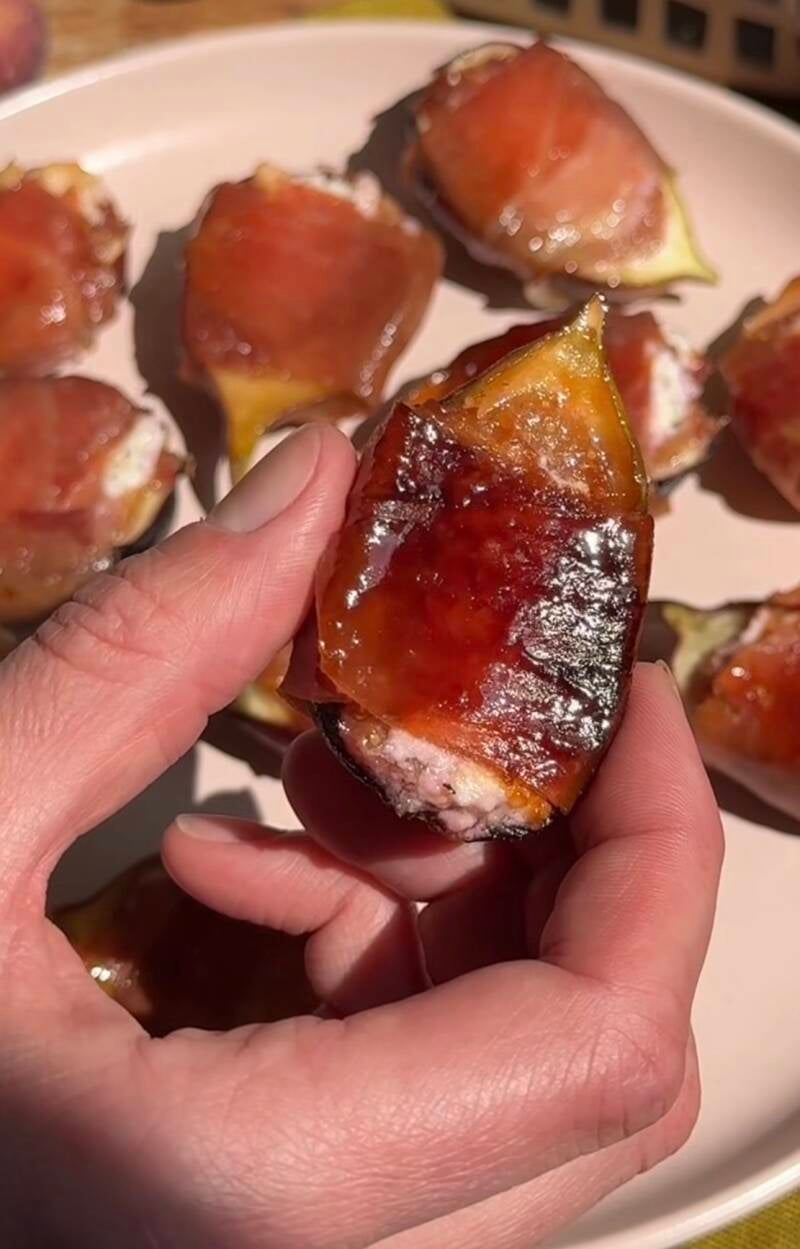
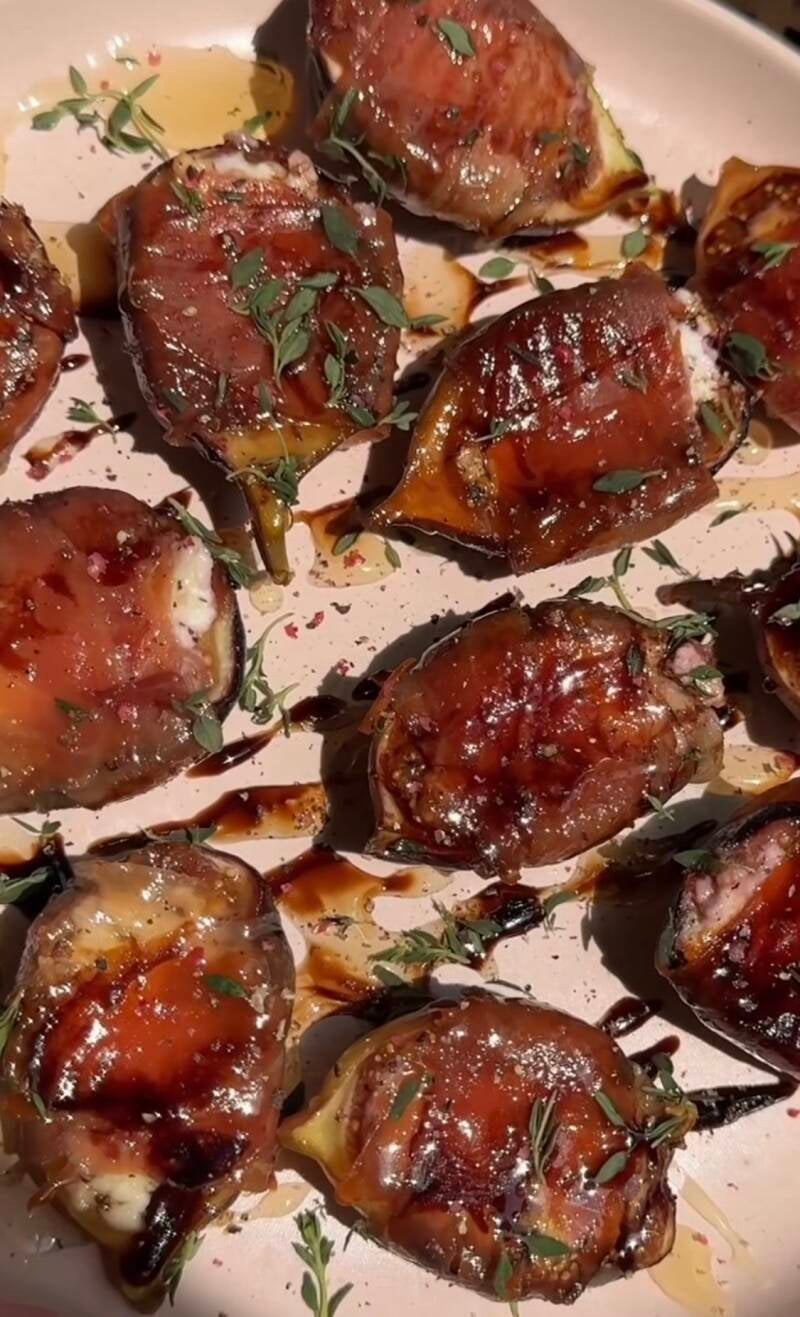
FIGS IN A BLANKET RECIPE:
Serves 4 (makes 12 total)
6 large figs, sliced in half
6 slices prosciutto, sliced in half lengthwise
1/4 cup goat cheese (we used herb goat cheese)
For serving: honey, balsamic glaze, black pepper
Preheat oven to 375˚F.
Slice each fig in half. Use a small spoon (or a melon baller) to scoop out some of the inside. Don’t get rid of it – enjoy with some yogurt or in another recipe!
Fill each cavity with ~1 tsp goat cheese (more or less depending on the size of your figs.
Wrap each fig tightly in prosciutto. If it’s wrapped too loosely, some of the goat cheese may ooze out while baking.
Place flat side down on a nonstick baking sheet. Bake for 15-18 minutes, until the prosciutto is crispy on the bottom and the figs are soft. Let cool for a few minutes, then transfer to a plate.
Drizzle with honey, balsamic glaze and black pepper. Enjoy warm!
Ready to expand your fig collection?
Now that you know how simple and rewarding it is to root healthy fig cuttings, explore our curated selection of heritage and sweet dessert varieties grown right here in Livingston, Louisiana.